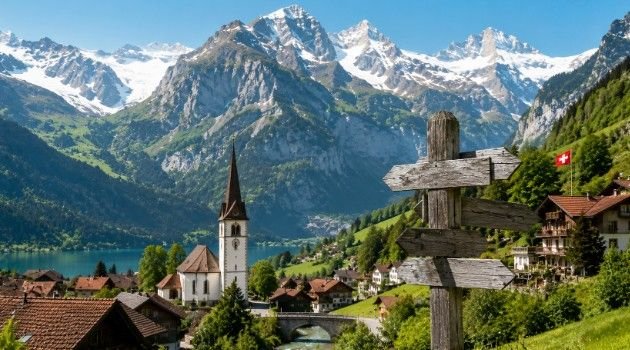
Geography facts often seem straightforward until a question reveals a surprisingly rich story behind it. One interesting question that catches many people off guard is which country has 4 official languages.
The answer is Switzerland, a European nation known not only for breathtaking Alpine scenery but also for its remarkable linguistic diversity. What makes this fact even more fascinating is how four different language communities have successfully coexisted for centuries while helping shape one strong national identity.
Key Takeaways
- Switzerland is the most prominent country with four official languages.
- German, French, Italian, and Romansh are recognized nationally.
- Each language dominates a specific region of the country.
- Multilingualism is deeply connected to Swiss history and culture.
- Switzerland is considered a global model for linguistic harmony.
Which Country Has 4 Official Languages?
This question has a simple answer but an incredibly interesting background. Switzerland officially recognizes four languages: German, French, Italian, and Romansh. Unlike many countries that use a single national language, Switzerland embraces linguistic diversity as part of its national identity.
Located in Central Europe, Switzerland borders Germany, France, Italy, Austria, and Liechtenstein. These neighboring influences played a major role in shaping the country’s language landscape over hundreds of years. Today, its multilingual system is considered one of the most successful examples of cultural coexistence in the world.
The Swiss approach demonstrates that multiple language communities can thrive together while maintaining political stability, social unity, and a strong sense of national belonging.
Meet Switzerland’s Four Official Languages
Each language represents a unique cultural region within the country. German is the most widely spoken language and serves as the primary language for most Swiss citizens. French dominates western Switzerland, while Italian is mainly spoken in the south.
Romansh is the smallest language community and is primarily found in parts of the canton of Grisons. Although spoken by less than one percent of the population, it remains an important symbol of Swiss heritage and cultural preservation.
Together, these languages create a distinctive national character that sets Switzerland apart from most countries around the globe.
Language Distribution Across The Country
The four official languages are not evenly spread throughout Switzerland. German speakers account for approximately sixty-two percent of the population and are concentrated in central and eastern regions.
French speakers make up roughly twenty-three percent and are primarily located in western cantons, including areas around Geneva and Lausanne. Italian speakers represent about eight percent of the population and are mainly found in Ticino.
Romansh remains a regional language spoken by a small community in Grisons, helping preserve one of Europe’s oldest linguistic traditions.
Why This Country Fact Is So Cool
Understanding which country has 4 official languages is more than simply learning a trivia answer. It offers a glimpse into how cultures, languages, and histories can blend together while maintaining mutual respect and national unity.
Many countries struggle with cultural differences, yet Switzerland has turned diversity into one of its greatest strengths. That makes this fact especially memorable for travelers, students, and anyone interested in world cultures.
It is a reminder that differences do not have to divide people. Sometimes they become the foundation of a nation’s success.
How Switzerland Became Multilingual
The story behind Switzerland’s languages stretches back centuries. Understanding this history helps explain why multilingualism remains such an important part of Swiss life today.
A History Shaped By Geography
Switzerland developed in a region surrounded by powerful European cultures. Communities speaking Germanic, Romance, and other languages settled in different areas over time.
The Alps and mountainous terrain helped preserve regional identities. Instead of forcing a single language across the country, Switzerland allowed these communities to maintain their linguistic traditions.
As the Swiss Confederation grew, multiple languages became part of its national framework rather than a source of conflict.
Respect For Regional Identity
One reason Switzerland succeeds as a multilingual nation is its strong respect for local autonomy. Individual cantons have significant control over education, administration, and cultural affairs.
This decentralized approach allows language communities to preserve their traditions while remaining connected through a shared Swiss identity.
The result is a country where linguistic diversity is celebrated rather than viewed as an obstacle.
Protecting Romansh Heritage
Romansh deserves special attention because it is one of Switzerland’s most unique cultural treasures. Derived from Latin, this Rhaeto-Romance language has survived for centuries despite having relatively few speakers.
Government support, education programs, and cultural initiatives help ensure Romansh remains an active part of Switzerland’s national story.
Life In A Four-Language Nation
Switzerland’s multilingual system influences everyday life in ways many visitors find fascinating.
Education And Language Learning
Swiss students typically learn multiple languages during their school years. Depending on their region, children often study another national language alongside English.
This educational approach encourages communication between language communities and helps strengthen national cohesion. It also provides practical advantages in international business, tourism, and diplomacy.
Government And Public Services
Federal government documents are commonly available in German, French, and Italian. Important information is provided in multiple languages to ensure accessibility for citizens across the country.
This commitment to inclusion helps maintain trust and participation within Swiss society. Language equality is considered an essential component of the country’s democratic system.
Everyday Communication
Despite having four official languages, most Swiss citizens primarily speak the language of their region. However, many people are multilingual and can communicate across language boundaries. This creates a society where linguistic flexibility is both common and highly valued.
Other Places With Four Official Languages
Although Switzerland is the most famous answer to which country has 4 official languages, it is not the only place where four languages hold official recognition.
Singapore’s Four-Language System
Singapore recognizes English, Mandarin Chinese, Malay, and Tamil as official languages. Each language reflects an important part of the country’s multicultural population.
English serves as the primary working language, while the other languages preserve cultural heritage and community identity. Singapore demonstrates another successful model of multilingual governance policies.
Nunavut In Canada
Nunavut, a territory in northern Canada, officially recognizes English, French, Inuktitut, and Inuinnaqtun. This recognition helps protect Indigenous languages while ensuring access to government services for diverse communities. Although Nunavut is not an independent country, it provides another interesting example of four-language official status.
Using This Knowledge In Real Life
Learning which country has 4 official languages can be useful in more ways than many people realize.
Start by remembering Switzerland’s four languages: German, French, Italian, and Romansh. Connecting each language to a specific region makes the fact easier to recall.
Next, use this knowledge to better understand European geography, cultural diversity, and international relations. The topic frequently appears in quizzes, travel discussions, educational content, and competitive exams.
Finally, explore how multilingual countries function. Understanding these systems can broaden cultural awareness and improve appreciation for global diversity.
More Interesting Facts About Switzerland
Switzerland offers much more than linguistic diversity. The country consistently ranks among the world’s best places for quality of life, innovation, healthcare, and education.
It is famous for direct democracy, allowing citizens to vote regularly on national and local issues. This unique political system encourages active public participation.
Switzerland is also known for its neutrality, world-class chocolate, luxury watches, and spectacular mountain landscapes that attract millions of visitors every year.
Frequently Asked Questions
1. Which country has 3 official languages?
Belgium is one of the best-known countries with three official languages. Dutch, French, and German are recognized nationally, reflecting the country’s diverse cultural and regional communities.
2. What 5 countries have the highest number of official languages?
Zimbabwe, Bolivia, South Africa, India, and Singapore are among the places known for recognizing a large number of official or constitutionally protected languages within their territories.
3. Which country has no official language?
The United States does not have an official language at the federal level. English is the most widely spoken language, but no language is legally designated nationwide.
4. What is the only country that has 11 official languages?
South Africa is the world’s only country with eleven official languages. This policy reflects its diverse cultural heritage and commitment to linguistic inclusion after apartheid.
Four Languages, One Remarkable Nation
Now that you know which country has 4 official languages, it becomes clear why Switzerland stands out among the world’s nations. Its recognition of German, French, Italian, and Romansh reflects centuries of history, regional diversity, and cultural cooperation.
More importantly, Switzerland shows that different linguistic communities can thrive together while building a strong national identity. For anyone fascinated by country facts, world history, and cultural geography, Switzerland remains one of the most inspiring examples of unity through diversity.