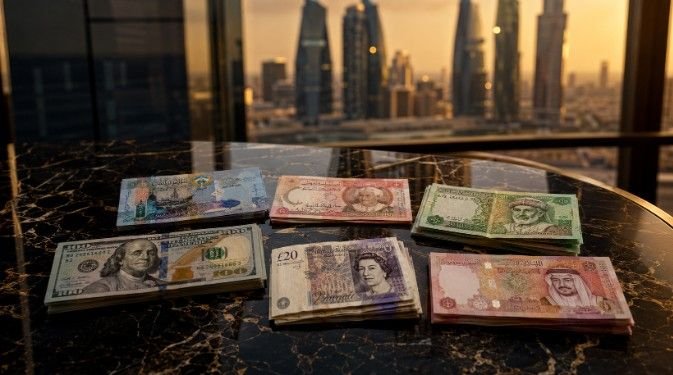
A chat about expensive travel destinations recently turned into a debate about money and exchange rates. That discussion led straight to the topic of the strongest currency worldwide, a fascinating subject that reveals how history, natural resources, and economic decisions shape the value of money across nations.
Surprisingly, the world’s most valuable currency is not the US dollar but the Kuwaiti Dinar.
Key Takeaways
- The Kuwaiti Dinar is currently the world’s highest-valued currency.
- Most top-ranking currencies come from economically stable nations.
- Currency value and global influence are not the same thing.
- Oil-rich countries dominate the highest currency rankings.
- Strong currencies often reflect long-term economic discipline.
What Makes A Currency Strong?
A strong currency is one that has a high exchange value compared to other currencies. In simple terms, one unit of a strong currency can buy more foreign currency than weaker alternatives. This value is influenced by economic stability, inflation rates, government policies, exports, and investor confidence.
Currency strength is often viewed as a sign of economic health. Countries with stable political systems, controlled inflation, and reliable revenue sources generally maintain stronger currencies. These factors help attract investors and strengthen trust in the nation’s financial system.
While exchange rates fluctuate daily, some currencies consistently remain among the world’s strongest due to decades of sound economic management and strategic planning.
Strong Currency Vs Powerful Currency
A strong currency refers to the highest exchange value per unit. A powerful currency refers to global influence in trade, banking, and international reserves. The US dollar remains the most widely used currency worldwide, but it is not the highest-valued currency by unit.
Factors Behind Currency Value
Economic growth, inflation control, foreign reserves, export strength, and interest rates all influence currency performance. Countries that maintain balance across these areas often enjoy stronger and more stable currencies.
Top 5 Highest-Valued Currencies Today
These currencies consistently rank among the most valuable in the world.
1. Kuwaiti Dinar (KWD)
The Kuwaiti Dinar remains the strongest currency worldwide, with one dinar worth approximately $3.25 USD. Introduced in 1961 after Kuwait gained independence, it quickly became one of the world’s most respected currencies.
Kuwait holds some of the largest proven oil reserves on Earth. Revenue from oil exports has helped create a stable economy, high living standards, and strong government finances. The currency is also linked to a basket of major currencies, which helps maintain its value.
Beyond economics, Kuwait has a rich maritime history. Long before oil transformed the nation, Kuwait was an important trading center connecting the Arabian Gulf with neighboring regions.
2. Bahraini Dinar (BHD)
The Bahraini Dinar is valued at roughly $2.65 USD per unit, making it one of the strongest currencies globally. Bahrain’s economy benefits from oil and natural gas resources, but the country has also developed a successful banking and financial services sector. This diversification has strengthened economic resilience over the years.
Historically, Bahrain was a key center of the ancient Dilmun civilization, making it one of the Gulf region’s most historically significant nations.
3. Omani Rial (OMR)
The Omani Rial trades at approximately $2.60 USD and remains among the world’s highest-valued currencies.
Oman’s currency strength is supported by energy exports and a fixed exchange rate system linked to the US dollar. Stable government policies have helped preserve confidence in the Rial for decades.
Oman has a remarkable seafaring history. Its traders once sailed across the Indian Ocean, building connections with East Africa, India, and Southeast Asia.
4. Jordanian Dinar (JOD)
The Jordanian Dinar is worth about $1.41 USD per unit and stands out because Jordan lacks the vast oil wealth enjoyed by some neighboring countries.
Its strength comes largely from disciplined monetary policies and a fixed exchange rate arrangement. These measures have helped maintain stability despite regional economic challenges.
Jordan is home to Petra, one of the world’s most famous archaeological sites, reflecting the country’s deep historical significance.
5. British Pound Sterling (GBP)
The British Pound remains one of the world’s most respected currencies, valued at roughly $1.25 USD. As one of the oldest currencies still in circulation, the Pound reflects centuries of trade, finance, and economic development. London’s position as a major global financial center continues to support its strength.
The United Kingdom’s influence on global commerce, banking, and international trade has played a major role in maintaining confidence in the Pound over generations.
Why Gulf Nations Dominate The Rankings
Several of the world’s strongest currencies come from the same region.
Wealth From Natural Resources
Oil and natural gas exports provide substantial government revenues. Countries such as Kuwait, Bahrain, and Oman have used energy resources to build strong economies and maintain financial stability. These revenues support public services, infrastructure, and economic growth.
Smart Currency Management
Strong policies play an equally important role. Many Gulf nations carefully manage price levels and inflation rates and maintain large foreign reserves. These measures reduce volatility and help protect currency value during uncertain economic periods.
Small Populations, Strong Economies
Population size can also influence currency performance. Several Gulf countries generate significant export income while supporting relatively small populations. This creates favorable economic conditions that contribute to stronger currencies.
How To Use Strongest Currency Worldwide Knowledge
Understanding currency rankings can provide real-world benefits.
Start by comparing exchange rates before international travel. Knowing which currencies hold greater value helps create more accurate budgets and avoid unexpected expenses abroad.
Next, follow economic indicators such as inflation, exports, and central bank decisions. These factors often explain why certain currencies strengthen or weaken over time.
Finally, connect currency strength with country facts and history. Studying how nations built economic stability provides valuable insight into global development and financial success.
Frequently Asked Questions
1. What is the 10 strongest currency in the world?
The top ten usually include the Kuwaiti Dinar, Bahraini Dinar, Omani Rial, Jordanian Dinar, British Pound, Gibraltar Pound, Cayman Islands Dollar, Swiss Franc, Euro, and US Dollar based on exchange value.
2. What dollar is stronger than USD?
The Cayman Islands Dollar is stronger than the US Dollar in terms of exchange value. One Cayman Islands Dollar is worth more than one US Dollar due to its exchange rate structure.
3. What is the big 5 currency?
The Big Five currencies generally refer to the US Dollar, Euro, British Pound, Japanese Yen, and Swiss Franc because they dominate global trading and international finance markets.
4. What currency is 1 USD worth the most?
One US Dollar converts into large amounts of currencies with lower unit values, including the Vietnamese Dong and Indonesian Rupiah, making the numerical conversion appear much higher.
A Currency Journey Worth Exploring
The strongest currency worldwide represents far more than an exchange rate. It reflects national history, economic planning, natural resources, and global confidence. From Kuwait’s oil-driven prosperity to Britain’s financial heritage and Oman’s maritime legacy, each currency tells a unique story of oldest capital cities worldwide.
Exploring the strongest currency worldwide offers a fascinating glimpse into how countries build lasting economic strength and secure their place in the global economy.