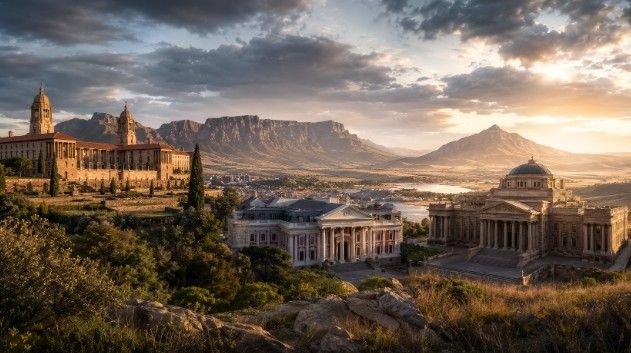
Country facts often reveal fascinating surprises, and few are more interesting than discovering that south africa have three capitals. Most countries operate from a single capital city, but South Africa follows a completely different path. Its government is divided among three important cities, each serving a specific purpose. This unusual arrangement reflects the country’s rich history, political compromise, and commitment to balancing power across regions.
Key Takeaways
- South Africa has three capitals that serve different branches of government.
- Pretoria is the executive capital and administrative center.
- Cape Town hosts Parliament and serves as the legislative capital.
- Bloemfontein is the judicial capital and home to the Supreme Court of Appeal.
- The system was created in 1910 to balance political power among regions.
Why Does South Africa Have Three Capitals?
Understanding the reason behind South Africa’s three-capital system reveals an important chapter in the country’s history.
Unlike most nations that centralize government functions in one city, South Africa distributes power among three locations. This arrangement was officially established in 1910 when the Union of South Africa was formed. Political leaders from different regions wanted representation and influence, making it difficult to agree on a single capital.
Rather than allowing one city to dominate, a compromise was reached. Government responsibilities were divided among Pretoria, Cape Town, and Bloemfontein. This solution helped maintain regional balance and encouraged unity among previously separate territories.
Today, the three-capital system remains one of the most distinctive features of South African governance and continues to attract attention from geography enthusiasts around the world.
The Birth Of A Compromise
The decision was rooted in politics rather than geography. Before unification, several colonies and former Boer republics existed independently. Each region considered its leading city important enough to become the national capital. Sharing government functions became the most practical solution.
A System That Still Works
More than a century later, the arrangement remains in place. Although discussions occasionally arise about consolidating government offices, the three-capital model continues to symbolize cooperation and historical balance.
A Fun Reason To Know This Fact
Learning why South Africa have three capitals is more useful than it sounds.
This fact frequently appears in quizzes, geography competitions, travel discussions, and educational exams. It is also one of the easiest ways to impress fellow country-fact enthusiasts because most people assume every nation has only one capital city. Understanding the story behind the three capitals makes South Africa easier to remember and appreciate.
Meet South Africa’s Three Capitals
Each capital city performs a different government function.
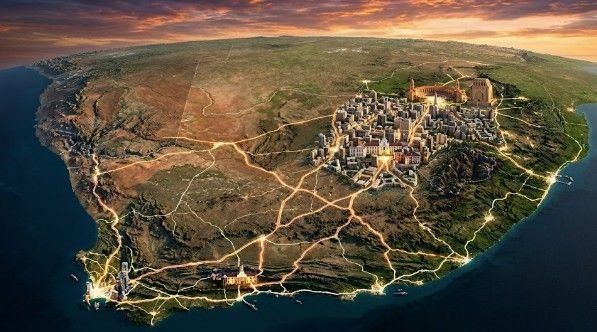
Pretoria: The Executive Capital
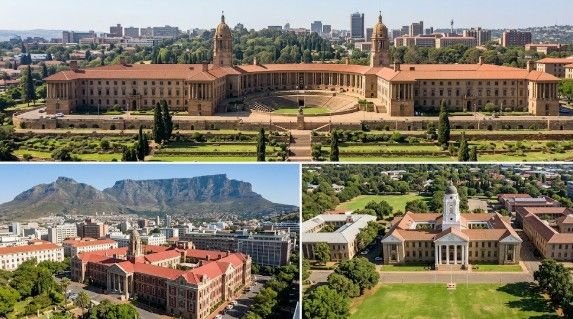
Pretoria serves as the executive capital of South Africa. The President, Cabinet, and most government departments operate from Pretoria. This city acts as the country’s administrative center and plays a major role in managing national affairs. Many foreign embassies are also located here.
Known for its historic buildings and beautiful jacaranda trees, Pretoria is often regarded as the political heart of South Africa.
Cape Town: The Legislative Capital
Cape Town is where South Africa’s laws are created. The South African Parliament meets in Cape Town, making it the legislative capital. Members of Parliament gather here to debate policies, discuss national issues, and pass legislation that affects the country.
Beyond politics, Cape Town is globally recognized for Table Mountain, coastal scenery, and cultural diversity, making it one of Africa’s most famous cities.
Bloemfontein: The Judicial Capital
Bloemfontein serves as the judicial capital. The city houses the Supreme Court of Appeal, which is the highest court of appeal outside constitutional matters. Major legal decisions and appeals are handled here.
Although it receives less international attention than Pretoria or Cape Town, Bloemfontein remains an essential pillar of South Africa’s government system.
The History Behind The Three-Capital System
The origins of this arrangement stretch back more than a hundred years.
Formation Of The Union
The Union of South Africa was established in 1910. The Cape Colony, Natal, Transvaal, and Orange Free State joined together to form a single political entity. Deciding on a national capital quickly became one of the biggest challenges facing leaders.
Since every region wanted influence, sharing governmental functions became the most acceptable compromise.
Balancing Regional Power
The arrangement helped prevent political dominance. Assigning different government branches to different cities ensured that no single region gained excessive control over national affairs. This balance was considered crucial for maintaining unity.
A Legacy That Endures
Many political systems evolve over time. However, South Africa’s three-capital structure has survived because it continues to reflect historical agreements and regional representation. It remains a defining feature of the nation’s identity.
Fascinating Facts About The Capitals
The three capitals each have unique characteristics that extend beyond government functions.
Pretoria’s Diplomatic Importance
Pretoria hosts many embassies and diplomatic missions. Because it is the executive capital, foreign governments maintain strong connections with institutions located in the city.
Cape Town’s Global Appeal
Cape Town consistently ranks among the world’s most beautiful cities. Its blend of mountains, beaches, and history attracts millions of visitors while serving as an important political center.
Bloemfontein’s Legal Legacy
Bloemfontein plays a major role in the legal system. Its judicial importance ensures that the city remains central to South Africa’s constitutional and legal framework.
How To Remember South Africa Have Three Capitals
Remembering the three capitals becomes easy with a simple approach.

First, connect Pretoria with leadership and administration because it houses the President and executive government. Next, associate Cape Town with Parliament and lawmaking activities. Finally, link Bloemfontein with courts and legal decisions.
A useful memory trick is to think of government as three parts. Leadership belongs to Pretoria, legislation belongs to Cape Town, and justice belongs to Bloemfontein. Following this step-by-step method helps students, travelers, and quiz enthusiasts remember the system quickly.
Understanding why South Africa have three capitals also makes it easier to appreciate the country’s history and political structure.
Modern Benefits And Challenges
The three-capital arrangement creates both advantages and disadvantages like in country that has 4 official languages.
Benefits Of Shared Power
Supporters believe the system promotes fairness. Distributing government functions among different cities helps preserve regional representation and honors the historical compromise that created the Union of South Africa.
Administrative Challenges
Maintaining offices in multiple cities can be expensive. Government officials often travel between capitals, increasing logistical and operational costs. Coordination can also become more complex compared to countries with a single capital.
Ongoing Discussions
The topic occasionally sparks debate. Some people support centralization to reduce costs, while others argue that preserving the three-capital system protects an important part of South Africa’s heritage.
Frequently Asked Questions
1. What is the only country with 3 capitals?
South Africa is widely recognized as the only country with three official capitals, with Pretoria, Cape Town, and Bloemfontein each serving a different branch of government.
2. Why is Johannesburg not a capital of South Africa?
Johannesburg is the country’s largest city and economic powerhouse, but it was not selected during the 1910 political compromise that established South Africa’s three-capital system.
3. Who is the richest woman in SA?
Wendy Appelbaum is often recognized as one of South Africa’s wealthiest women due to her successful business ventures, investments, and philanthropic contributions.
4. Which African country has 3 capital cities?
South Africa is the African nation officially known for having three capitals, with separate executive, legislative, and judicial centers serving the government.
Three Capitals, One Incredible Story
The fact that south africa have three capitals continues to amaze travelers, students, and geography lovers around the world. Pretoria, Cape Town, and Bloemfontein each perform a unique role that keeps the government functioning effectively.
Created through a historic political compromise in 1910, this remarkable system remains a powerful symbol of balance, cooperation, and national unity, making South Africa one of the most fascinating countries to explore and understand.