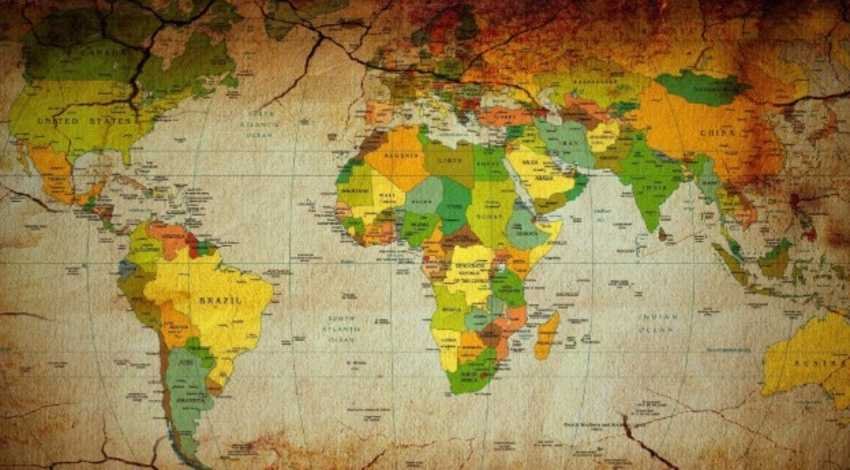
Learning the world map can feel difficult at first because there are so many countries, oceans, islands, capitals, and borders to remember. I used to look at a map and feel lost before even starting.
But once I learned to break geography into smaller parts, everything became easier. Tips for Learning World Maps work best when they turn memorization into a simple daily habit. With blank maps, games, country shapes, flags, and cultural facts, anyone can start understanding the world map with more confidence.
Why Learning World Maps Feels Difficult at First
A world map looks crowded because it shows the entire planet in one view. Beginners often try to learn every country at once, which makes the process stressful. The smarter method is to start with the biggest details first and slowly move toward smaller ones.
Think of the world map like a puzzle. Continents are the large puzzle pieces. Oceans create space between them. Countries, capitals, rivers, mountains, and islands are the smaller details that become easier once the main structure is clear.
Start With Continents and Oceans
Before learning individual countries, start with the seven continents and five major oceans. Learn where Asia, Africa, Europe, North America, South America, Australia, and Antarctica are placed. Then move on to the Pacific, Atlantic, Indian, Arctic, and Southern Oceans.
This helps you understand direction. For example, Africa sits below Europe and west of Asia. South America lies below North America. Australia is surrounded by the Indian Ocean region and Pacific Oceans. When these basics become familiar, country locations make more sense.
Learn Countries by Region Instead of Alphabetically
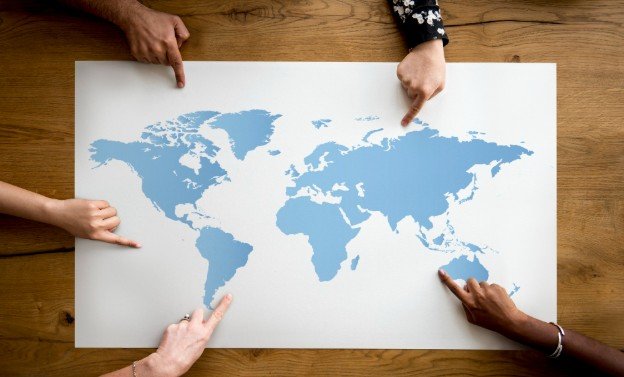
Trying to memorize countries alphabetically can feel random. Regional learning is much easier because nearby countries are connected visually. Start with one small area and master it before moving to another.
For example, South America is a good region for beginners. Brazil is large and easy to notice. Chile is long and narrow. Argentina sits beside Chile. Peru, Colombia, and Venezuela become easier to place once you understand the region’s shape.
You can then move to Europe, Southeast Asia, the Middle East, East Africa, or the Caribbean. This method helps you remember borders, neighbors, and locations naturally.
Use Blank Maps for Better Memory
Looking at a labeled map is helpful, but blank maps are better for real learning. A blank map forces your brain to recall names and locations instead of simply reading them.
Start with one continent. Write the country names you remember. Then check your answers and mark the ones you missed. Repeat this process a few times during the week. Each mistake becomes part of the learning process.
Blank map practice is powerful because it builds active recall. This means your brain learns to pull information from memory, which is much stronger than just looking at a finished map.
Use Country Shapes as Memory Clues
Many countries have shapes that are easy to remember. Italy looks like a boot. Chile is long and thin. Japan appears as a chain of islands. India has a clear triangular shape. These visual clues make geography more interesting.
You can also create simple associations. Spain and Portugal sit together on the Iberian Peninsula. Norway, Sweden, and Finland form a northern group in Europe. The United Kingdom and Ireland are island neighbors. These small patterns make the world map easier to understand.
Practice With Geography Games and Quizzes
Games make map learning feel less boring. Online quizzes, map challenges, and flag-matching games help you repeat country names and locations without feeling like you are studying too hard.
Short practice sessions work best. Instead of studying for one long hour, spend 10 to 15 minutes daily. Try one quiz on countries, one on capitals, and one on flags. Repetition helps your brain remember locations faster.
Connect Maps With Flags, Capitals, and Culture
A country becomes easier to remember when you connect it with real details. Do not treat countries as only shapes on a map. Learn their flags, capitals, landmarks, foods, traditions, and natural features.
For example, Japan can be remembered with Tokyo, Mount Fuji, sushi, and its red circle flag. Brazil can be connected with Brasília, the Amazon, football, and its green-yellow flag. Egypt becomes easier to remember with Cairo, the Nile River, pyramids, and its location in North Africa.
These connections help geography feel alive instead of dry.
Use Globes, Atlases, and Digital Maps
A flat map is useful, but it can sometimes distort size and distance. A globe helps you see the Earth more naturally. Atlases provide detailed country and region information. Digital maps help you zoom into cities, rivers, mountains, islands, and borders.
Using all three gives a stronger learning experience. A globe helps with the big picture. An atlas supports deeper study. Digital maps make exploration easier and more interactive.
Frequently Asked Questions
1. What are the best tips for learning world maps for beginners?
Start with continents and oceans, then learn countries by region, use blank maps, practice with quizzes, and connect places with flags and culture.
2. How long does it take to learn the world map?
It depends on practice, but 10 to 15 minutes a day can help beginners learn major countries and regions within a few weeks.
3. Should I learn countries or capitals first?
Learn countries first because location is the foundation. After that, capitals, flags, landmarks, and cultural facts become easier to remember.
4. Are geography games useful for learning maps?
Yes, geography games are useful because they make learning active, fun, and repetitive, which helps improve memory faster.
Final Thoughts
When I study a world map now, I do not see it as a confusing collection of names. I see patterns, regions, flags, cultures, and stories. The best way to learn is to start small, practice daily, and connect places with real-world details. With Tips for Learning World Maps, blank map practice, memory tricks, and fun quizzes can turn geography into something simple, useful, and enjoyable.